

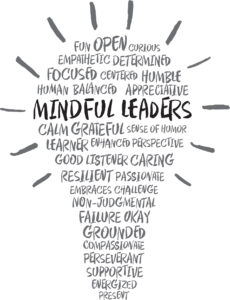
As an executive leadership coach, I spend much of my time helping clients think through challenges so they can do their best work. Lately, one theme has consistently emerged in our coaching conversations: many talented people don’t feel psychologically safe enough to do their best work.
Nearly a decade ago, in my book Show Up as Your Best Self: Mindful Leadership, Meditation, and More, I defined a mindful leader as someone who brings out the best in themselves and others by consistently showing up present, grounded, and compassionate—especially in challenging situations.
Over the years, I’ve come to realize that another essential way leaders bring out the best in themselves and others is by creating psychological safety. Leaders who do their own inner work, remain attuned to others, and self-manage create an environment where colleagues feel psychologically safe—that is, comfortable speaking up, asking questions, sharing ideas, admitting mistakes, and respectfully challenging one another without fear of embarrassment, retaliation, or harm to their relationships or careers.
Establishing psychological safety is one of the clearest expressions of mindful leadership in any setting.
Consider a leadership team discussing a high-stakes strategic decision. A subject matter expert on the team sees a significant risk that others have overlooked but hesitates to speak up, worried about being viewed as negative or undermining the group’s momentum. Another team member notices a flaw in the implementation plan but stays silent after seeing a colleague dismissed in a previous meeting.
So How Do Mindful Leaders Intentionally Create Psychological Safety?
I recently heard Dr. Amir Levine, a Columbia-trained psychiatrist and neuroscientist and coauthor of Attached and Secure, describe a framework called CARRP for building secure relationships. Although it was originally developed in the context of close personal relationships, I believe its principles translate remarkably well to leadership in every setting. In fact, I see them as practical leadership behaviors that help create the psychological safety that allows people, groups, and organizations to thrive.
Levine describes secure relationships as providing a —a foundation that allows people to take risks, solve problems, and grow because they trust someone has their back. Effective leaders commit to doing the inner work to create a secure base wherever they lead.
One practical way to do this is through Levine’s CARRP framework, which describes five behaviors that foster secure relationships:
- Consistent: Show up reliably over time. Behave in ways people can count on.
- Available: Be accessible when people need support.
- Responsive: Listen carefully and respond thoughtfully.
- Reliable: Follow through on commitments. Do what you say you’ll do.
- Predictable: Reduce unnecessary uncertainty through clear communication and steady leadership.
Mindfulness Is the Inner Work; CARRP Is Its Outward Expression
Mindful leadership begins with leaders doing their own inner work—self-managing their thoughts, emotions, and reactions so they consistently show up present, grounded, and compassionate, especially in challenging situations. When leaders demonstrate CARRP behaviors—being consistent, available, responsive, reliable, and predictable—they create psychological safety and a secure base from which people, teams, and organizations can thrive. In that kind of environment, people think more clearly, collaborate more effectively, take healthy risks, make better decisions, and ultimately do their best work.
For more information, click here to listen to the podcast The Tiny Daily Habit That Rewires Your Brain for Better Relationships with Amir Levine on 10% with Dan Harris (June 15, 2026; one hour 10 minutes).