

Blog
RIP Captain Pepa

This month, I’m sharing something a little more personal. I recently lost my father-in-law, Larry—Pepa to us—and below is the eulogy I had the privilege of delivering at his funeral. His life reminded me that some of our greatest lessons in leadership come simply from how we live, love, and show up for others.
When I think of Larry—who he was to me, and who he was to so many people — a few things immediately come to mind: his deep love of family, the way he always showed up for the people he loved, his art, his laugh, and, of course, how to enjoy a vodka martini – straight up, two olives.
I first met Larry in 1998, at his home on Fresh Ponds Road, about six weeks after Brad and I started dating. In that first meeting, Larry said, “Why don’t I build a house behind this house so you and Brad can move in and start having a couple of kids?” That’s not exactly how he said it, but it went something like that and … It was music to my ears.
Larry and I were both ready to move this relationship along – we just had to make sure that Brad was on board.
And so he was, and on June 25, 2000, Brad and I were married, and from that day on, Larry took me in. And I never, for even one second ever, felt like an outsider or an in-law. I simply felt like part of Larry’s family.
And then, about a year after we were married, on August 3, 2001, Ari was born, and Larry became Pepa—not just to Ari, but to me, too.
Like many other New Yorkers close to the scene at 9/11, Brad, Ari, and I had to leave our home in New York City and move in with Pepa and Grandma in East Brunswick, New Jersey. Brad would head back into New York City for work each day, and I could tell Pepa was very excited to be home with Ari and me.
I’d wake up each morning to freshly cut cantaloupe and brewed coffee, and then Pepa, Ari, and I would take our daily ride into Princeton to see Pepa’s mother (Ari’s great-grandmother) Nani. We’d hang out at her house on Bank Street, and then the four of us would head out for lunch. And if I were lucky enough, Aunt Eunice would join.
So, for the first few years in New Jersey, besides Brad and Ari, I spent my days with Pepa, Nani, and sometimes Aunt Eunice. And they were all the family and friends I needed. I was perfectly content.
In fact, I often referred to Pepa as my best girlfriend in Princeton – which always made him laugh that great, familiar Pepa laugh.
Over the last 28 years, Pepa became my family, my friend, and someone I knew I could always count on.
One day, walking in NOLA, I saw a painting I loved. He took a picture of it, and about a month later, Pepa gave me his own painted version that proudly hangs in our hallway.
And quite a few years later, in 2011, when I mentioned that our living room felt a little dull, a week or so later he gave us a beautiful, colorful painting of the Italian Riviera, based on a picture he had taken while visiting his grandson, Joey. It still hangs above our fireplace, protected by me from a large flat screen TV.
That was Pepa. He listened. He remembered. And he found a way to let you know he was thinking about you.
His paintings are treasures to our family. And now I see another little piece of Pepa in Gabi’s paintings—not only in the same circular signature she inherited from him, but in her talent as an artist. It’s a talent that began with Pepa’s dad, Mor Nani, was passed down to Pepa, and now lives on in Gabi. L’Dor V’Dor.
I also remember Gabi coming home from preschool one day and declaring that Pepa was her favorite person. And I have to say, I was perfectly happy – actually thrilled – to relinquish that title to Pepa.
And when my dad passed away fifteen years ago, I said, “Pepa, you now have big shoes to fill.” And without missing a beat, he said, “I accept.” … I knew I could say that to him. And I knew he meant it.
There is a beautiful idea in Jewish tradition that one way we can honor someone who has died is by carrying forward some of their best qualities—by letting the way they lived influence the way we live.
There are so many things about Pepa that I hope to carry forward—his gentleness, the way he listened, his love of family, and, of course, the way he always showed up.
But there is one other thing I’m going to do in his honor.
Pepa had a passion for sailing, and those in our family who sailed with him affectionately called him The Captain.
So even though I went to sailing camp for four years as a kid—and, embarrassingly, spent the entire time playing tennis and refusing to sail because I was afraid of the eels in the water—I’m finally going to learn how to sail.
Pepa, I promise: the next time Brad asks me to take sailing lessons or go on a sailing trip, I will say yes.
Thank you, Pepa. You loved me. You loved Brad, and you taught Brad—and all of us—by example how to be a wonderful parent. You loved Ari and Gabi. And you loved your whole family deeply—your children, their spouses, your grandchildren, your nieces and nephews. We all knew how much we mattered to you.
Okay, so you didn’t love Bear (our ten-pound Cavapoochon). In fact, you hated her. Oh well. No one’s perfect.
But you taught me what it means to be family and how to show up for the people you love.
Just like you did. I love you, Pepa.
Your memory will be for a blessing and live on in all those who knew and loved you.
Lawrence (Larry) Bailey, 95, born in 1931, a beloved husband, father, grandfather, passed away September 25, 2026 (14 Tishrei 5787).
Click here for Larry’s obituary.
Why Brains Need Friends:
What Neuroscience Can Teach Us about Leadership, Belonging, and Well-Being
We often think of social connection as something that is a nice-to-have—good for morale, culture, and perhaps engagement. Yet neuroscience suggests it is much more fundamental than that.
Ben Rein, PhD, Stanford neuroscientist and author of Why Brains Need Friends: The Neuroscience of Social Connection, explores how deeply our brains and bodies are wired for human interaction—and what can happen when we don’t get enough of it.
His work raises important questions for leaders: In a world that is becoming increasingly efficient, digital, and automated, are we unintentionally designing human connection out of everyday life—and work? And what is the impact on our communities, cultures, and well-being as we experience less human interaction?
A Small Moment That Made Me Think
Recently, I went to my neighborhood bank to exchange dollars for euros. Instead of completing the transaction with a service representative, I was encouraged to go home and make the exchange online, where I would receive a discount.
It was certainly more efficient. But I found myself unexpectedly disappointed. As someone who works from home, I had been looking forward to the interaction—the brief conversation with another person, the exchange of pleasantries, the simple experience of being out in the world.
That moment underscored a simple but often overlooked truth: small interactions matter. A conversation with a colleague. A few minutes of conversation before a meeting. Saying hello to someone in the hallway. Talking with a barista. Asking someone how their weekend really was.
Researchers sometimes refer to these as micro-interactions. Individually, they may seem insignificant. Collectively, they contribute to our sense of connection to the world around us. Increasingly, however, technology is removing these small but meaningful human exchanges. For leaders, this is worth paying attention to.
The Big Idea: We Are Wired for Connection
One of Rein’s central messages is remarkably simple: Chatting with people is one of the most powerful things we can do for our brains—and it costs nothing. Positive social interactions engage powerful biological systems involving oxytocin, serotonin, dopamine, and the brain’s reward pathways.
On the flip side, a lack of regular social interaction, particularly over prolonged periods, can activate the body’s stress response, contributing to increased cortisol and inflammation and potentially leaving us less resilient when other physical or psychological stressors arise.
What This Means for Leaders
The implications extend beyond individual well-being. Reduced social connection can have real business consequences—affecting trust, collaboration, engagement, innovation, and retention. When employees feel less connected to one another and to the organization, the cost can show up in how effectively they work together, solve problems, share ideas, and choose to stay.
Given these potential consequences, leaders have a responsibility to shape the environments in which employees spend a significant portion of their lives. In our efforts to make work faster, more flexible, and more efficient, we should also consider what may inadvertently disappear—and whether the efficiencies we gain in the short term could come at a longer-term cost to performance.
1. Don’t Optimize Every Human Interaction Away
Technology can make processes and workflows more efficient—and that’s often a good thing. But the potential cost of reducing or eliminating human interaction needs to be considered.
A five-minute conversation before a meeting, walking over to someone’s desk instead of sending another message, or calling someone rather than adding another email to their inbox may appear inefficient.
From a human perspective, however, those moments can be valuable.
Leadership question: Where might we be optimizing for efficiency at the expense of human connection?
2. Micro-Interactions Count
Connection doesn’t always require an offsite retreat, happy hour, team dinner, or elaborate event (all those count too!).
A genuine greeting matters. So does remembering something someone told you, checking in after a difficult meeting, or taking two minutes to connect rather than rushing past someone.
These small interactions can accumulate into something much larger: the feeling that I am seen here—and that I matter.
3. Connection Isn’t One-Size-Fits-All
People vary significantly in how much social interaction they find energizing. Some people thrive with frequent contact. Others need considerably more solitude.
That distinction matters, particularly when leading across different work environments—in person or hybrid—or when working with introverts and extraverts.
The goal is to create opportunities for connection without prescribing exactly what connection should look like or how much someone needs.
4. Upgrade an Interaction When You Can: Text → Phone → Video → In Person
Not every message needs to become a meeting. But some interactions benefit from richer forms of communication.
As communication becomes richer, we gain access to tone of voice, facial expressions, body language, and countless subtle cues our brains use to understand one another.
When something is sensitive, emotional, ambiguous, or relationally important, consider moving it up a level.
I’m always pleasantly surprised by how warmly people respond when I pick up the phone to call rather than send an email or text.
5. We Underestimate How Much Others Crave Connection, Too
Research suggests we’re often poor predictors of how social interactions will go.
We anticipate awkwardness. We worry about rejection. We assume someone doesn’t want to be interrupted.
Yet interactions with strangers and acquaintances often turn out to be more positive than we expect.
Leaders can help normalize connection simply by having the confidence to initiate it and model that behavior for others. Ask the extra question. Offer the compliment. Invite someone into the conversation. Stay for another minute.
The Leadership Takeaway
We spend a lot of time thinking about how leaders drive performance, execute strategy, manage change, and increase productivity.
Yet we also need to spend a little more time thinking about something much more basic:
- Do our teams have opportunities to laugh together?
- Do people feel noticed?
- Do we make time for conversations that don’t have an agenda?
- Do people feel comfortable reaching out?
- And as AI, automation, remote work, self-service technology, and digital communication continue to reshape our lives, are we preserving enough opportunities for people simply to connect?
The future of work will undoubtedly become more technologically sophisticated, making one very old-fashioned leadership capability even more valuable: being present and connecting with another human being.
Additional Resources
- Click here to listen to the podcast The Neuroscience of Likeability, Social Connection, and Brain Health with Ben Rein on 10% with Dan Harris (August 10, 2026, one hour).
- Click here to learn more about Ben Rein, Ph.D., neuroscientist, science communicator, and author of Why Brains Need Friends: The Neuroscience of Social Connection.
What Your Team Isn’t Telling You—and What Leaders Can Do About It
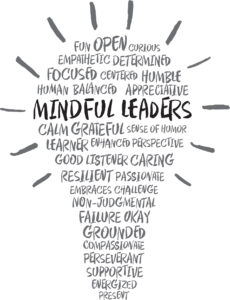
As an executive leadership coach, I spend much of my time helping clients think through challenges so they can do their best work. Lately, one theme has consistently emerged in our coaching conversations: many talented people don’t feel psychologically safe enough to do their best work.
Nearly a decade ago, in my book Show Up as Your Best Self: Mindful Leadership, Meditation, and More, I defined a mindful leader as someone who brings out the best in themselves and others by consistently showing up present, grounded, and compassionate—especially in challenging situations.
Over the years, I’ve come to realize that another essential way leaders bring out the best in themselves and others is by creating psychological safety. Leaders who do their own inner work, remain attuned to others, and self-manage create an environment where colleagues feel psychologically safe—that is, comfortable speaking up, asking questions, sharing ideas, admitting mistakes, and respectfully challenging one another without fear of embarrassment, retaliation, or harm to their relationships or careers.
Establishing psychological safety is one of the clearest expressions of mindful leadership in any setting.
Consider a leadership team discussing a high-stakes strategic decision. A subject matter expert on the team sees a significant risk that others have overlooked but hesitates to speak up, worried about being viewed as negative or undermining the group’s momentum. Another team member notices a flaw in the implementation plan but stays silent after seeing a colleague dismissed in a previous meeting.
So How Do Mindful Leaders Intentionally Create Psychological Safety?
I recently heard Dr. Amir Levine, a Columbia-trained psychiatrist and neuroscientist and coauthor of Attached and Secure, describe a framework called CARRP for building secure relationships. Although it was originally developed in the context of close personal relationships, I believe its principles translate remarkably well to leadership in every setting. In fact, I see them as practical leadership behaviors that help create the psychological safety that allows people, groups, and organizations to thrive.
Levine describes secure relationships as providing a —a foundation that allows people to take risks, solve problems, and grow because they trust someone has their back. Effective leaders commit to doing the inner work to create a secure base wherever they lead.
One practical way to do this is through Levine’s CARRP framework, which describes five behaviors that foster secure relationships:
- Consistent: Show up reliably over time. Behave in ways people can count on.
- Available: Be accessible when people need support.
- Responsive: Listen carefully and respond thoughtfully.
- Reliable: Follow through on commitments. Do what you say you’ll do.
- Predictable: Reduce unnecessary uncertainty through clear communication and steady leadership.
Mindfulness Is the Inner Work; CARRP Is Its Outward Expression
Mindful leadership begins with leaders doing their own inner work—self-managing their thoughts, emotions, and reactions so they consistently show up present, grounded, and compassionate, especially in challenging situations. When leaders demonstrate CARRP behaviors—being consistent, available, responsive, reliable, and predictable—they create psychological safety and a secure base from which people, teams, and organizations can thrive. In that kind of environment, people think more clearly, collaborate more effectively, take healthy risks, make better decisions, and ultimately do their best work.
For more information, click here to listen to the podcast The Tiny Daily Habit That Rewires Your Brain for Better Relationships with Amir Levine on 10% with Dan Harris (June 15, 2026; one hour 10 minutes).
The Power of the Pause
…one of the take-home lessons of Buddhist philosophy is that feelings just are.
If we accepted their arising and subsiding as part of life,
rather than reacting to them as if they were deeply meaningful,
we’d often be better off.
Learning to do that is a big part of what mindfulness meditation is all about.
– Robert Wright, Why Buddhism is True, p. 27.
The Science of Emotional Regulation
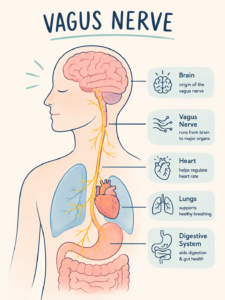
Understanding your nervous system and emotional regulation is becoming increasingly relevant to how we lead, perform, and recover under pressure.
Dr. Kevin J. Tracey, president and CEO of the Feinstein Institutes for Medical Research and a pioneer in vagus nerve research, shares a compelling perspective on the body’s major two-way superhighway: the vagus nerve, a network of 200,000 fibers coordinating critical functions throughout your body and performing specialized jobs to keep you healthy. In his latest book, The Great Nerve: The New Science of the Vagus Nerve and How to Harness Its Healing Reflexes, Tracey explores how this complex system connects your brain to vital organs, helping regulate heart rate, inflammation, and overall balance in the body.
The Big Idea
The vagus nerve plays a central role in how your body maintains stability and responds to stress. While there is a growing wave of “biohacking” advice (trendy wellness hacks) online, Dr. Tracey emphasizes that many claims are overstated or lack solid backing. Much of the popular advice on “optimizing” vagal tone (your body’s capacity to relax and recover) is not yet supported by robust scientific evidence. While tools and techniques can help, they are not magic fixes. The basics still matter most.
The real foundation of a healthy nervous system depends on everyday habits, not gadgets. Simple, consistent practices like breathwork, physical movement, social connection, and quality sleep play a meaningful role in regulating your nervous system and reducing inflammation.
Six Practical Ways to Support Your Vagus Nerve
- Practice slow, deep breathing. Try a simple practice called “straw breathing”: inhale for three seconds, then exhale slowly for seven seconds through pursed lips—like you’re blowing through a straw or gently blowing out candles on a cake. Just a few minutes each day can help calm your system. One of my clients uses this practice during board meetings to stay grounded and calm.
- Prioritize regular exercise. Consistent aerobic movement, like walking, cycling, hiking, or jogging, supports overall nervous system health.
- Get restorative sleep. Aim for seven to eight hours of quality sleep each night. Sleep is emotional first aid, and your nervous system depends on it.
- Cultivate social connection. Meaningful relationships and community engagement are deeply supportive for your emotional and physiological health.
- Try safe cold exposure. You don’t need expensive tubs or retreats. Simply ending your shower with two to three minutes of cold water or splashing your face with cold water can gently stimulate your vagus nerve (check with your doctor first).
- Incorporate mindfulness or meditation. Simple, daily practices that focus on relaxation and breath awareness can promote calm and resilience. Research suggests even eight minutes a day, including short “micro-hits” throughout the day, can make a meaningful impact.
The takeaway is straightforward: emotional regulation and nervous system health are built through simple, consistent habits, not complexity or gadgets.
For more information, click here to listen to the podcast The Science of Regulating Your Nervous System with Dr. Kevin Tracey on 10% with Dan Harris (April 27 2026; one hour 25 minutes).
A Simple Reset for Busy Leaders: The Power of a Pause
Last week I had the opportunity to facilitate a leadership retreat focused on something that many of us don’t prioritize enough—rest, recharging, reconnecting (with ourselves and others), and supporting overall well-being.
Amid busy schedules, constant decision-making, and high expectations, we took time to explore a few simple practices that can help create space, restore focus, and reset in real time.
I thought I’d share a short Breathing and Tapping Practice Guide from the session—practical tools you can use throughout your day, whether you’re preparing for a meeting, navigating a stressful moment, or simply looking to pause and reset.
__
Breathing + Tapping Guide: Simple, accessible practices—no special setup needed.
- Physiological Sigh
A fast reset when experiencing a sudden stress or anxiety spike
- Inhale (deep)
- Inhale (quick top-up)
- Long sigh out
- Repeat: 2–5 times
- 4–6–8 Breathing
To cultivate deeper calm when feeling anxious, wired, or unable to relax (especially helpful before sleep)
- Take a few normal breaths
- Inhale 4
- Hold 6
- Exhale 8
- Repeat: 4–8 rounds
- Straw Breathing
A gentle way to regulate when feeling overwhelmed, or a subtle reset in public settings (e.g. before meetings, during meetings, or useful when stuck in traffic!)
- Take a few normal breaths
- Inhale through nose
- Exhale slowly through pursed lips (as if through a straw or blowing out a candle)
- Repeat: 1–3 minutes
- Box Breathing (4–4–4–4)
To support clarity, focus, and composure—particularly useful before important conversations or presentations.
- Take a few normal breaths
- Inhale 4
- Hold 4
- Exhale 4
- Hold 4
- Repeat: 4–6 cycles
- Tapping
To reduce emotional intensity and interrupt stress patterns
- Use 2–3 fingers and tap gently
- About 5–10 taps per point
- Points are throughout your body and wherever you feel tightness such as eyebrow, side of eye, under eye, under nose, chin, collarbone, under arm, and top of head.
- As you tap, simply notice what you’re feeling—no need to judge or change it
- Continue tapping and allow the body to settle
- Practice: for 1–3 minutes, (or longer if helpful)
Closing Note
A slightly longer inhale can help energize and refocus the mind and body, while a longer exhale calms the system and activates the body’s “rest and digest” response.
These practices are intentionally simple—but when used consistently, they can be powerful tools for staying grounded, present, and effective throughout the day.
If any of these practices resonate, I encourage you to try one or two throughout your day—especially in moments where a pause could make a difference.
Emotional Intelligence: Why A Lower Score Might Be a Good Thing

I’m always curious how clients describe and rate their own emotional intelligence — and how they assess others. Interestingly, those who rate themselves lowest often demonstrate the highest emotional intelligence. And the reverse is true, too.
Why? Because self-awareness is the foundation of it all.
Those with higher emotional intelligence tend to have a more honest, often more humble, view of themselves. They notice their blind spots, mistakes, and emotional patterns. In contrast, those who overestimate their EI are often missing that very self-awareness.
This month, I want to break down emotional intelligence (EI) using Daniel Goleman’s simple four-part framework. I often share this model with clients because it’s easy to remember and deeply practical.
It also aligns with the definition of mindfulness: being aware of what’s happening in both our internal and external environments—and then choosing how to respond in a thoughtful, intentional way. The opposite is being unaware of what’s happening internally and externally, and reacting out of habit.
Emotional Intelligence is also one of the strongest predictors of success in both work and life. And the good news? It’s not fixed; it’s a skill we can develop.
Daniel Goleman defines emotional intelligence (EI) as the capacity to recognize our own feelings and those of others, to motivate ourselves, and to manage emotions effectively in ourselves and in our relationships.
Goleman’s Emotional Intelligence Four-Part Framework
1. Self-Awareness: What we know about ourselves.
Self-awareness is the practice of self-reflection and the starting point of personal growth. Journaling, meditating, or speaking with a friend, coach, or therapist are helpful ways to cultivate it.
- What am I feeling?
- How am I showing up?
- Am I being triggered?
- What feedback am I seeking from people I trust?
2. Self-Management: What we do based on what we know.
Self-management is the ability to pause, regulate, and choose your response rather than react automatically. I often call it the power of the pause — interrupting thoughts and emotions long enough to respond intentionally. This is where maturity lives.
Self-management isn’t about suppressing emotions but rather working with them skillfully. Emotions will arise — they always do. The real question is: what helps you pause and respond wisely?
A Viktor Frankl quote captures what it means to have a self-management practice: “Between the stimulus and response, there is a space. And in that space lies our freedom and power to choose our response.”
Practices that clients say strengthen self-management include:
- Deep belly breathing
- Meditation (breath, body, loving-kindness)
- Prayer or spiritual reflection
- Prioritizing sleep (emotional first aid)
- Reducing caffeine
- Connecting with supportive people
- Hanging out with your favorite dog or cat
- Movement and exercise
- Time outdoors and in nature
- Journaling
- Baking and cooking
- Listening to music
- Laughter
What works for you?
Strong self-management creates the foundation for how we show up for ourselves and others.
3. Social Awareness: What we know about others and our environment.
Social awareness is the practice of deep, empathetic listening, both for what is said and for what isn’t said. It’s also about tuning in to the environment around you.
- Am I listening more than I’m talking?
- What might the other person be feeling?
- What am I noticing in their tone, body language, and energy?
- What’s going on in the environment around me—the workplace, the room, the broader context?
4. Relationship Management: What we do based on what we know.
Relationship management is the integration of self-awareness, self-management, and social awareness, and taking action on what we know in order to be of service to others.
This includes influencing others, navigating crucial conversations, managing conflict, coaching and mentoring, and providing inspirational leadership. At its core, it reflects the ability to apply emotional awareness of both self and others to build and sustain strong, productive relationships.
As you reflect this month, you might consider:
- How much time do I allow for self-reflection?
- How often do I check in with myself and others before responding, or do I fall into a habitual, reactive mode?
- What might I commit to trying in order to manage myself more effectively?
- What are some ways I can cultivate stronger relationships at work and at home?
- Where do I naturally excel within this framework? What areas might I want to further develop?
What’s Really Driving You?

This month I’m sharing insights from Why Buddhism Is True by Robert Wright, a book that has deepened my understanding of how our brains work and what enables us to lead with self-awareness, sound judgment, and a confident presence — at home, in our communities, and at work.
Wright argues, drawing on Buddhist teachings as well as modern neuroscience and evolutionary research, that our brains evolved for survival and status, not clarity. As a result, we’re wired for bias and self-protection, tendencies that can quietly distort perception and judgment and contribute to a persistent sense of dissatisfaction.
This means the mind you lead with comes preloaded with reactive “factory settings.” Leadership effectiveness depends on recognizing those settings and learning to work with them skillfully rather than being ruled by them.
Before diving into the leadership implications, it helps to understand one of Wright’s core ideas: the mind is not a single, unified decision-maker. Instead, it is made up of different brain “modules,” each shaped by evolution and designed to solve a survival problem. These brain modules are constantly competing with one another for influence. At a basic level, they revolve around threat detection, status protection, mate attraction, and social bonding. They evolved to help our ancestors survive and reproduce — not necessarily to help us think clearly or lead wisely.
Each evolved brain module has its own goal. It influences us by generating feelings tied to that goal: anxiety when threat is detected, pride or defensiveness when status feels at stake, desire when attraction is activated, and warmth or attachment when social bonds are strengthened or strained, creating a strong urge to act, even when that action may not serve the situation. Much of this happens quickly and outside our conscious awareness. In any given moment, the brain module that is strongest can shape how we interpret events and respond.
Because these feelings and reactions seem true and urgent in the moment, we mistake them for reality. This helps explain how any of us, even at our best, can become reactive, defensive, or overly certain, and why awareness of what is driving us is essential to sound judgment.
Ten Leadership Lessons Inspired by Why Buddhism Is True by Robert Wright
1. Your mind wasn’t built for truth – it was built to keep you safe.
When a situation feels personal or high-stakes, the self-protection, status-seeking, or threat-detection brain modules may shape your first interpretation. Strong leaders don’t assume they’re unbiased; they assume they’re human. Pausing to ask, “Which part of me is reacting?” creates space for clearer judgment and sounder decisions.
2. The status-seeking module in the brain is never fully satisfied.
The part of the mind (brain module) wired for achievement and recognition rarely stays satisfied for long. After a promotion, a win, or praise, the relief fades and the drive returns. When leaders recognize this pattern in themselves, they are less likely to build cultures of chronic striving and more likely to foster sustainable motivation.
3. Intensity doesn’t always signal importance.
Strong reactions can feel like a sign that something deeply important is at stake. But emotional intensity often reflects activation of a brain module, not necessarily a violation of core values. Leadership maturity involves pausing long enough to ask whether the reaction reflects self-protection, or what best serves the situation.
4. While defensiveness is natural, non-defensiveness is a core leadership skill.
The mind instinctively works to preserve a positive self-image. When feedback threatens that image, defensiveness is a natural reaction. Leadership growth begins when we can notice that reflex and remain open rather than protective. Learning to receive feedback without becoming defensive and to separate identity from a single moment of critique is one of the most important leadership skills we can develop.
5. The threat-detection brain module is always scanning.
We are wired to notice problems faster than what’s working. In leadership, that can create overcorrection, hyper-vigilance, or defensiveness. Awareness of this bias helps leaders respond proportionately rather than reactively, preserving perspective and optimism even while addressing real challenges.
6. The mind defends intention; leadership requires owning impact.
When something goes wrong, our first instinct is often to explain what we meant: “That’s not what I intended.” The blame-avoidance or status-protection brain module steps in quickly.
Leadership maturity means shifting the focus from intention to impact by asking, “How did this land?” and “What effect did it have?” — even when the answer is hard to hear. Strong leaders take responsibility for impact, not just intent.
7. Emotions are signals of activated brain modules.
Each module in the brain has a goal, but that goal is rooted in instinct and survival. It is not necessarily aligned with what best serves us as human beings or as modern leaders. To move us toward behaviors that increased survival or status in the past, each module generates powerful feelings to motivate action. Anger may arise from the fairness-tracking module, pushing us to correct a perceived wrong. Anxiety may come from the threat-detection module, urging self-protection. Pride may reflect status-seeking, encouraging us to assert competence. Desire may reflect pleasure-seeking, pulling us toward reward.
These feelings aren’t random. They are motivational tools designed to trigger action quickly. But what once served survival doesn’t always serve sound judgment. Leaders who notice the feeling before acting on it create space for wiser, more intentional decisions.
8. Conflict often reflects threatened instincts, not just different opinions.
When conflict arises, it rarely feels calm or neutral. It feels charged. That’s because something important feels threatened: status, fairness, belonging, or safety. When one of these brain modules is activated, it generates strong emotion and pushes us to defend our position.
This is why conflict can feel so personal and intense. It’s not just about the issue at hand; it’s about protecting something that feels important. Recognizing this helps leaders slow down and ask, “What feels threatened here?” That question can reduce escalation and shift the focus from winning to understanding.
9. Mindfulness creates space between impulse and action.
Reflection-based practices like the RAIN meditation (see Additional Resources below) don’t silence the brain’s modules; they help us notice which one is strongest in the moment. Instead of automatically acting on the loudest feeling, whether it’s anger, anxiety, pride, or urgency, leaders learn to pause and observe.
That pause doesn’t erase the emotion, but it often softens its intensity. By reducing the intensity of the immediate reaction, leaders experience a greater sense of space between a feeling and a behavior. Rather than reacting from a single dominant module in the brain, leaders can choose to pause, carefully examine their thoughts and emotions, and respond in a way that is more aligned with the needs of the situation.
10. Compassion becomes practical.
If we recognize that everyone in the room shares the same evolved human wiring, made up of brain modules designed for self-protection, status, fairness, and belonging, then reactive or defensive behavior makes more sense. It doesn’t excuse poor behavior, but it does make it more understandable.
Seen this way, compassion isn’t soft; it’s pragmatic. When leaders recognize the underlying human wiring at play, they respond with steadiness rather than judgment. Working with those instincts, rather than fighting or shaming them, creates more influence, trust, and forward movement.
Ultimately, if our brains come with built-in survival wiring, leadership growth begins with learning to see that clearly. The ability to pause and self-check before responding, especially when emotions are strong, is one of the most important leadership skills we can develop. That brief pause allows us to notice which brain module is driving us and choose a response rather than default to a reaction. The more aware we become of the internal dynamics shaping our reactions, the more choice we cultivate in how we lead, and the less personally we take what happens within and around us.
Additional Resources
- Click here for the meditation: RAIN by Jeff Warren — Recognize, Accept, Investigate, and Non-identification — a practical, step-by-step method for noticing reactive “factory settings” and working skillfully with the brain modules and emotional signals described in Why Buddhism Is True.
- Click here to listen to Why Buddhism is True with Robert Wright on 10% Happier with Dan Harris (episode 95; 63 minutes).